Offshore development is one of the most cost-effective ways to build software - when it works. When it does not, the savings disappear into delays, miscommunication, and rebuild costs that wipe out the original advantage. After years of helping clients evaluate offshore teams and rescue projects that went sideways, I have seen the same red flags appear over and over.
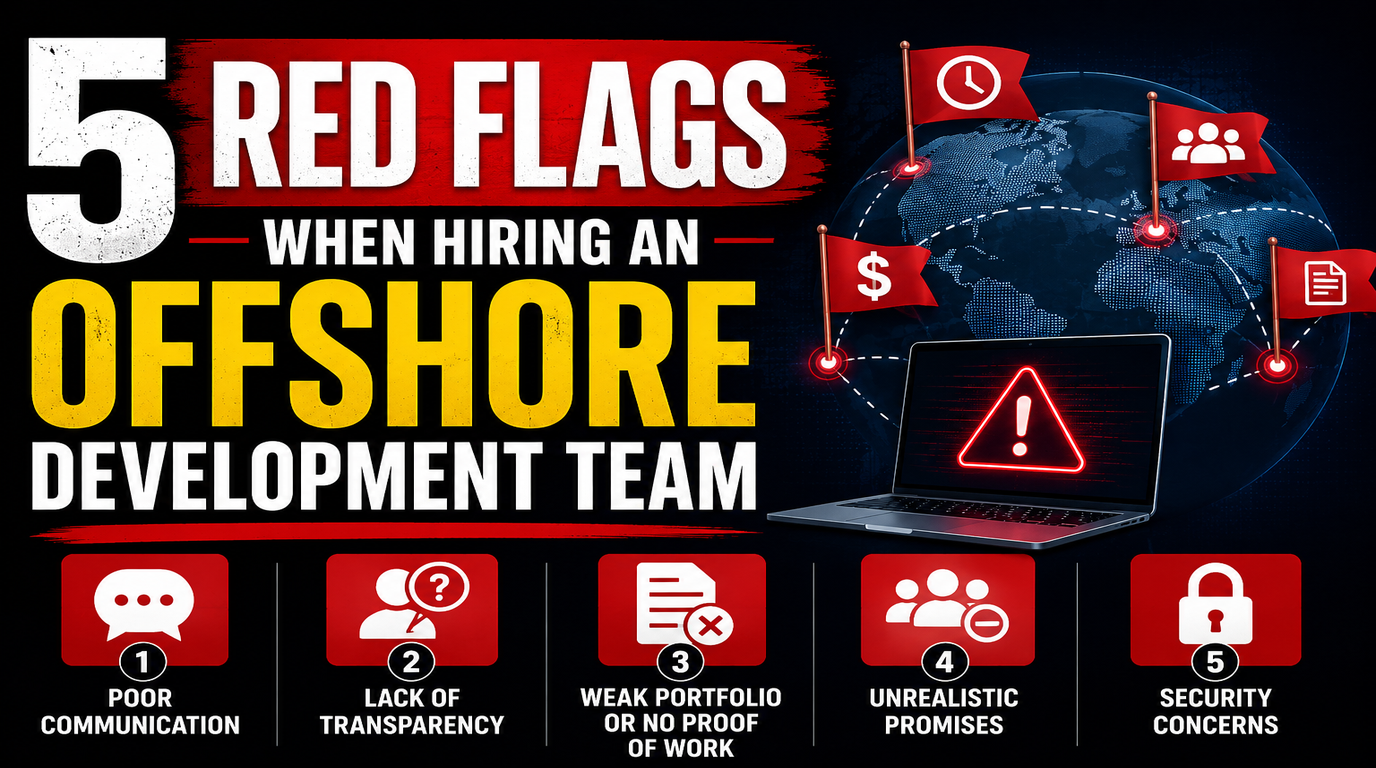
If you are about to hire an offshore development team for your business, here are the five things to watch for. Each one of these has, in my experience, predicted a project that ran into trouble.
Red Flag #1: They Quote a Price in the First 30 Minutes
Why it is dangerous: Software pricing depends entirely on scope. A team that gives you a number before understanding your product is either lowballing to win the bid or has no plan to actually meet that number.
Watch for: an instant "we can do that for $X,000" within the first call, before you have shown wireframes, discussed users, or covered edge cases. This is sales theater. The price changes the moment work starts.
What good looks like: A team that says "Let me ask you 20 questions, then I will send a written scope and quote within 3-5 days." That is the pace of a team that takes accountability seriously.
Red Flag #2: Their Communication Is One-Way
Why it is dangerous: Offshore teams that operate as pure "task takers" - waiting for instructions, never proposing alternatives, never pushing back - become a project liability. You end up doing both your job and theirs.
Watch for: meetings where they only nod and say "yes, we can do that." No questions. No alternatives. No "but have you considered..." When something is unclear, a good team raises it. A bad team just builds the wrong thing and asks for revisions later.
What good looks like: A team that respectfully challenges your assumptions when they see a problem. They say things like "We can build it that way, but here is a concern..." or "If you do X, you will have to redo it when Y happens. Are you sure?" That is a partner, not a vendor.
Red Flag #3: They Show You Logos Instead of Live Work
Why it is dangerous: Anyone can put a logo on a "Clients" page. What you actually want to see is software that works, in the wild, that they built recently.
Watch for: a portfolio that is all screenshots, mockups, and brand names. No URLs. No live applications. No code samples. When asked for live examples, they say "We have NDAs with all our clients."
What good looks like: Live, working URLs of products they shipped in the last 12 months. Specific case studies that explain what they built, what challenges came up, and what the outcome was. They should be proud to point you at their work, not vague about it.
Red Flag #4: Vague or Missing Process
Why it is dangerous: Software projects fail without process. If the offshore team cannot answer basic questions about how they work, you will live in chaos.
Watch for: confused or hand-wavy answers when you ask:
- "What is your project management tool? Can I see a sample sprint board?"
- "How often will I get updates and in what format?"
- "How do you handle change requests mid-project?"
- "What is your QA process before I see a feature?"
- "How do you handle bug reports after launch?"
If they say "we will figure it out" or "trust us" - run. Process is not bureaucracy, it is the only thing that keeps a project on track when 8 timezones separate you from the team.
What good looks like: A clear written process - sprint cycles, demo schedule, escalation path, reporting format. They should be able to walk you through how a previous client engagement worked, week by week.
Red Flag #5: The Person Selling Is Not the Person Building
Why it is dangerous: In many offshore agencies, you talk to a charismatic salesperson who promises everything, signs the contract, and then hands you off to a team you have never met. The team does not have the same understanding of your project that the salesperson built.
Watch for: a sales call run by someone who clearly does not write code. When you ask technical questions, they say "I will check with the team." After signing, you are introduced to a project manager and developers you have not vetted.
What good looks like: A technical lead, project manager, or senior developer joins the sales call. They answer your technical questions directly. After signing, the same people you spoke with stay involved in the project. There is continuity between sales and delivery.
The Good Offshore Partnership Pattern
Not every offshore team is a risk. The good ones share certain traits:
- They overlap your timezone for at least 4 hours a day - meaningful real-time communication
- They have native or near-native English communication in the people you actually work with
- They have been in business for 5+ years with documented case studies
- They lead with questions and process, not flashy decks and promises
- They are honest about what they can and cannot do
- They have direct, named team members - not just "our developers will handle it"
- References that confirm they delivered, communicated well, and stayed engaged after launch
Before You Sign: A 5-Step Diligence Process
- Have a discovery call without a contract. See how they handle ambiguity, technical questions, and pushback.
- Ask for 3 references and call them. Ask not just "did they do good work" but "what went wrong and how did they handle it?"
- Request a written scope and proposal. Read every line. If anything is vague, push back. If they cannot clarify, walk away.
- Start with a small paid pilot. A two-week, fixed-scope engagement - not the full project. See how they actually work before committing big budget.
- Verify the actual team. Get LinkedIn profiles, sample work from the specific people who will work on your project, not just the agency in general.
The Bottom Line
Hiring an offshore development team is one of the highest-leverage decisions you make as a business owner. The right team builds your product faster and cheaper than local talent ever could. The wrong team costs you the year.
The five red flags above are not exotic. They are the everyday signals of teams that will struggle to deliver. Watch for them in your first conversations. The teams that pass these tests are worth their slightly higher rate every single time.
At Logic Providers, we believe in transparent client relationships - clear scope, named team members, real timelines, and honest conversations when something needs to change. If you are evaluating offshore teams and want a second opinion before you sign, our team offers free consultations to help you ask the right questions, regardless of who you end up working with.